 BRENTWOODDENTAL & TMD
Published June 2026.
Key Takeaways
TMJ treatment insurance coverage is inconsistent because TMJ sits between medical and dental insurance, and neither category fully claims it.
- Medical insurance is often more likely than dental insurance to cover TMJ care, especially when the disorder is tied to injury, arthritis, or another medical condition.
- Many plans contain specific exclusion clauses or dollar limits for TMJ, and coverage varies by state, insurer, and individual policy.
- A documented diagnosis, imaging, and pre-authorization improve the chances of a claim being approved.
- When coverage falls short, financing options like CareCredit and HSA/FSA accounts can help cover out-of-pocket costs.
Jaw pain that will not quit, headaches that keep coming back, a jaw that clicks or locks. If you are dealing with these, you are probably looking at treatment options and asking a fair question: will insurance pay for any of it? TMJ treatment insurance coverage is one of the most confusing parts of getting help, and the honest answer is that it depends on your specific plan, how your treatment is billed, and even which state you live in. This guide breaks down how coverage actually works so you can plan before you start care.
Does Insurance Cover TMJ Treatment?
Sometimes, but coverage is inconsistent and depends heavily on your plan. TMJ care falls between medical and dental insurance, and many policies contain exclusions or dollar limits specific to TMJ.
Temporomandibular joint disorder (TMD, often called TMJ) describes a group of more than 30 conditions affecting the jaw joint and the muscles that move it. According to the National Institute of Dental and Craniofacial Research, a recent study found that about 11 to 12 million adults in the United States had pain in the region of the temporomandibular joint. That is a large patient population, yet insurance has been slow to treat TMJ as a standard, covered condition. National Institute of Dental and Craniofacial Research
The core problem is classification. TMJ involves a joint, like a knee or a shoulder, which sounds medical. But it sits in your mouth and is often treated by a dentist, which sounds dental. This gray area is why two people with nearly identical symptoms can get completely different answers from their insurers. The TMJ Association, a patient advocacy nonprofit, describes the situation plainly: insurance reimbursement for TMJ treatments can be complex and difficult to navigate, and coverage varies from state to state, company to company, and policy to policy. TMJ Association
Is TMJ Covered by Medical or Dental Insurance?
Medical insurance is usually more likely to cover TMJ treatment than dental insurance, especially if the condition is related to a bigger health issue. Dental plans usually only cover services related to teeth.
Medical insurance may help if TMJ is linked to something your health plan already covers, like a jaw injury, arthritis, or a condition you were born with. In these cases, your plan might cover things like imaging, physical therapy, prescription medications, or surgery if it is considered medically necessary. The key is documentation. Medical plans usually want proof that the treatment is needed for your health, not just for comfort or appearance.
Dental insurance works differently. Dental plans are generally built around services tied directly to teeth and the structures around them, such as exams, x-rays, crowns, and similar work. Some dental policies will help with an oral appliance or a bite-related treatment, but many do not cover broader joint or muscle problems at all. That leaves the cost to the patient.
There is also a documentation gap that catches specialty care. Orofacial pain became an officially recognized dental specialty in the United States in 2020, but insurance has not fully caught up. A CBS News investigation found that this type of specialty care is often not considered reimbursable by insurance, and several orofacial pain specialists described coverage as patchy, poor, or nonexistent. Knowing this ahead of time helps you set realistic expectations before treatment starts. CBS News
Dennis M. Holmes, DMD at Brentwood Dental & TMD in Brentwood, TN puts it this way: "Patients are often surprised to learn that the same TMJ treatment can be billed two very different ways. Part of my job before we even start is helping people understand whether their care is more likely to fall under medical or dental, so there are no billing surprises down the road."
Which TMJ Treatments Are Most Likely to Be Covered?
Simple, medically necessary treatments are usually the most likely to be covered. Insurers often approve basic care first and only consider advanced procedures after you have tried the simpler options.
The NIDCR encourages starting with conservative, reversible care for most TMD cases. Common first-line options include eating soft foods, applying heat or cold, gentle jaw exercises, over-the-counter anti-inflammatory medications like ibuprofen, and reducing habits such as jaw clenching and gum chewing. Because these approaches are low-risk and inexpensive, they rarely create big coverage battles, though you still pay for office visits and any prescriptions under your normal plan terms. National Institute of Dental and Craniofacial Research
Beyond first-line care, the NIDCR notes that physical therapy can help improve function and relieve pain, and certain behavioral approaches like cognitive behavioral therapy and biofeedback have been shown to help manage TMDs. Physical therapy in particular is often billable to medical insurance when a physician or dentist documents that it is medically necessary. National Institute of Dental and Craniofacial Research
Getting coverage for advanced treatments is more difficult. Custom appliances, specialized therapies, and surgery are often considered outside of standard care or labeled as experimental. Even surgery for TMJ is not always covered. For example, a major Cigna policy says TMJ surgery is only covered for certain severe cases and must meet strict criteria. The main point: the more advanced and expensive the treatment, the more proof your insurer will require.
Custom Occlusal Splint vs. Over-the-Counter Night Guard: What's the Coverage Difference?
A custom occlusal splint made by a dentist is more likely to get partial insurance coverage than a store-bought night guard, which you almost always have to pay for yourself. These two devices have different uses and costs.
An over-the-counter night guard is a boil-and-bite product you can buy at a pharmacy. It is cheap and helps cushion against grinding, but it is not custom-fit, not based on a diagnosis, and insurance does not treat it as a medical device. You have to pay for it yourself.
A custom occlusal splint (also called a stabilization appliance or bite splint) is made by a dentist from impressions of your teeth and designed around your specific diagnosis. Brentwood Dental & TMD does not recommend generic or universal splint designs, because an appliance built without an accurate diagnosis often fails to relieve symptoms. Because a custom splint is tied to a clinical diagnosis, some dental or medical plans will consider partial coverage, though many still apply limits or exclusions. The NIDCR also cautions that any appliance should not be designed to permanently change your bite, and you should stop using it and consult your provider if it causes pain. National Institute of Dental and Craniofacial Research

How Can You Improve Your Chances of TMJ Treatment Insurance Coverage?
You can improve your chances by getting a thorough, documented diagnosis, asking for pre-authorization, and using both your medical and dental benefits if possible. Being prepared is one of the most important steps.
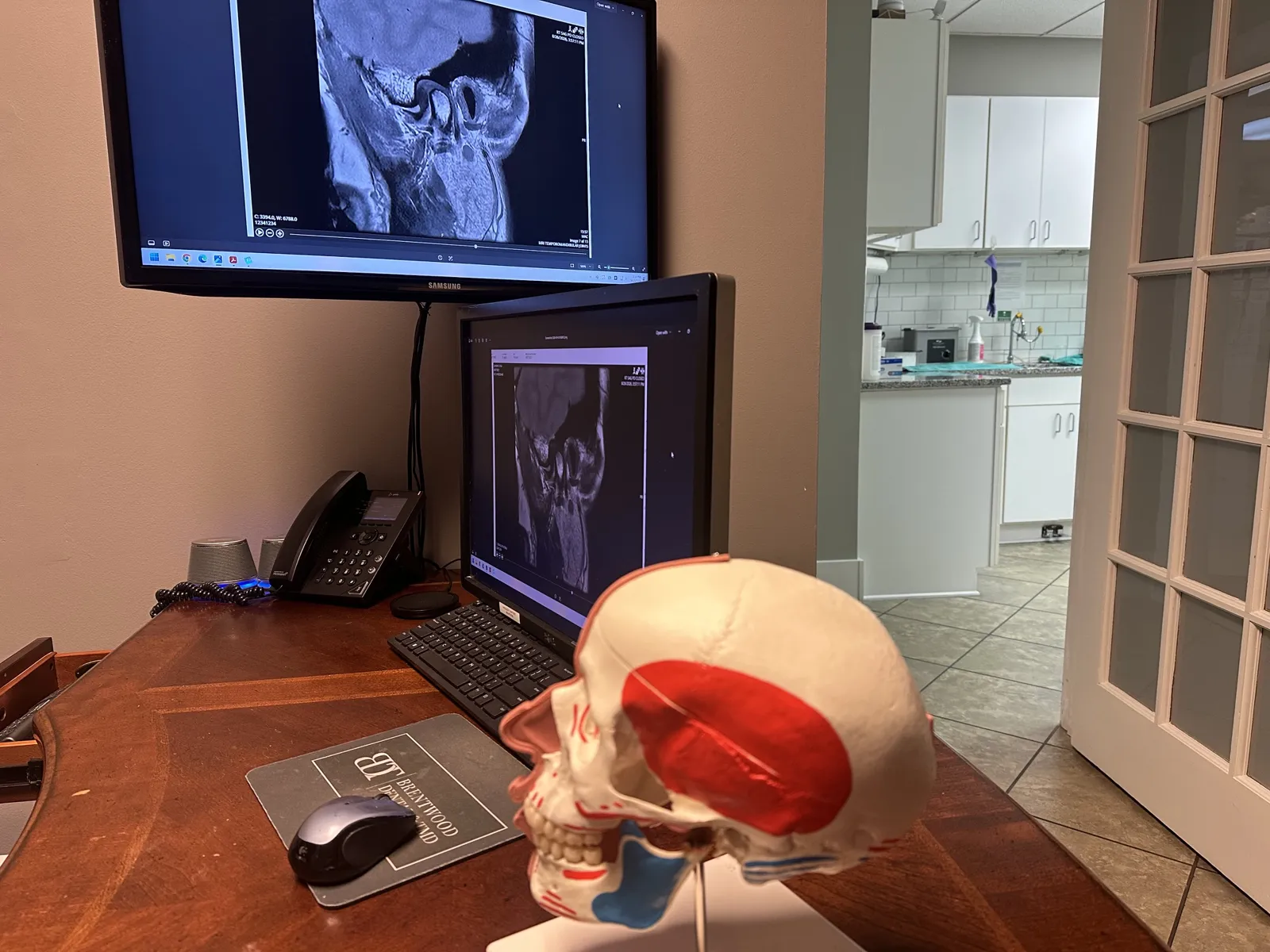
Start with a comprehensive diagnosis. Insurers are more likely to approve treatment backed by clinical findings, x-rays, or MRI imaging provided by a qualified provider. This is one reason detailed diagnostics matter so much in TMJ care. Having personally ordered and interpreted more than 24,000 TMJ MRIs over his career, Dr. Holmes builds the kind of documented diagnostic record that supports both treatment planning and insurance claims.
Next, ask about pre-authorization before treatment begins. Submitting a treatment plan to your insurer in advance tells you what is covered before you commit financially, rather than after. The TMJ Association recommends a clear process if a claim is denied: first speak with your benefits coordinator, take careful notes including names and dates of every conversation, and if customer service does not grant coverage, ask for a claims supervisor and review your plan's appeals process. TMJ Association
Finally, see if you can use both your medical and dental insurance. Some parts of your TMJ care might be covered by one plan, while other parts are covered by the other. A practice with experience in TMJ billing can help you sort out which services go to which plan.
How Much Does TMJ Treatment Cost Without Insurance?
There is no set price for TMJ treatment. Costs can vary a lot depending on your provider, where you live, and the type of care you need. The TMJ Association says prices can range widely based on how complex the treatment is.
According to the TMJ Association, there are no standardized costs for TMJ treatments, and treatment costs can range from several hundred dollars to hundreds of thousands of dollars. Conservative care like exercises, a custom splint, or physical therapy sits at the low end. Complex surgical intervention sits at the far, far higher end and is uncommon. TMJ Association
For most people, TMJ care does not reach the highest costs because conservative treatment usually solves or controls the problem. The best thing you can do is get an accurate diagnosis early, so you do not pay for treatments that do not fit your real condition.
What Payment Options Exist When Insurance Falls Short?
If insurance does not fully cover your TMJ care, financing programs and tax-advantaged health accounts can help lower or spread out the cost. These options can make treatment more affordable when insurance falls short.
Brentwood Dental & TMD offers financing through CareCredit, a healthcare credit card that lets you pay for treatment over time. CareCredit often offers promotional financing with no interest for set periods on qualifying purchases, as long as you pay the balance within the promotional window and keep up with minimum payments. Read the terms carefully, since deferred-interest plans can charge retroactive interest if the balance is not paid off in time. Carlmontdentalcare
Health Savings Accounts (HSAs) and Flexible Spending Accounts (FSAs) are another route. These let you set aside pre-tax dollars for qualified medical expenses, which can include many TMJ-related treatments. If your employer offers one of these accounts, it effectively lowers your out-of-pocket cost by using untaxed income.
Why Choose an Independent, TMJ-Focused Practice for This Process?
An independently owned practice that concentrates on TMJ can give you focused diagnostic attention and clear guidance on the medical-versus-dental billing question. Specialized experience matters when coverage is this complicated.
Brentwood Dental & TMD is an independently owned, single-location practice where roughly 95% of the work centers on TMJ/TMD therapy and complex dentistry. Dr. Holmes brings 30+ years of clinical experience and has successfully treated more than 12,000 TMJ and TMD cases. That depth matters for insurance, because accurate diagnosis and complete documentation are exactly what insurers ask for when reviewing a claim. The practice positions itself as Nashville's Center for TMJ Treatment & Complex Dentistry, and its team can walk you through both your treatment and your coverage options.
Ready to Get Answers About Your Jaw Pain?
If TMJ pain is affecting your daily life, you do not have to figure out the insurance maze alone. Call Brentwood Dental & TMD, Nashville's Center for TMJ Treatment & Complex Dentistry, at (615) 371-8888 to schedule a consultation and get a clear, documented diagnosis. The team can help you understand your treatment options and your coverage before you commit to care.Does medical insurance or dental insurance cover TMJ treatment?
Why do so many insurance plans exclude TMJ treatment?
Will insurance pay for a night guard or bite splint for TMJ?
What should I do if my TMJ insurance claim is denied?
Start by contacting your benefits coordinator and keeping detailed notes of every call, including names and dates. If customer service denies coverage, ask for a claims supervisor and review your plan's formal appeals process. The TMJ Association advises that appeals are difficult but are often the best path to getting coverage.