 BRENTWOODDENTAL & TMD
Published August 2026.
Key Takeaways
There is no standardized published price for a custom TMJ splint in Nashville or anywhere else in the U.S. National data puts dentist-made custom guards at $300 to $500 on average, sometimes above $1,000, while full diagnostic splint therapy can run into the thousands.
- The fee covers much more than the appliance itself: an exam and diagnosis, impressions or digital scans, lab fabrication, and a sequence of adjustment visits.
- Flat-plane (stabilization) splints are reversible and the conservative default. Repositioning orthotics carries a documented risk of permanent bite changes and calls for imaging first.
- A $15 to $25 drugstore guard can protect teeth in simple short-term grinding cases, but a poor fit can shift teeth and worsen the problem.
- Federal health guidance notes that many TMD symptoms improve without any appliance, so a splint is not an automatic first step.
If you have searched for TMJ splint cost and found pages quoting exact dollar figures without a source, you have already run into the main problem with this topic. Nobody publishes standardized splint pricing because the fee depends on which appliance you actually need, how many adjustment visits your case takes, and whether imaging comes first. This guide covers what the verified numbers show, what a custom occlusal splint fee actually covers in the Nashville area, and how flat-plane and repositioning appliances differ in both price and risk. It also covers something most cost pages skip: the cases where you do not need a splint at all.
How Much Does a Custom TMJ Splint Cost in the Nashville Area?
A custom TMJ splint has no standardized national price. Published data from CareCredit puts dentist-made custom guards at $300 to $500 on average, sometimes above $1,000, and the TMJ Association reports that full splint therapy can cost thousands of dollars.
This wide price range is not meant to be confusing. It is because 'TMJ splint' refers to several types of appliances for different needs. A custom occlusal splint, also called a TMJ mouth guard or bite splint, made to protect teeth from grinding, is usually less expensive. A therapeutic splint program that includes a specific diagnosis, imaging, and several adjustment visits costs much more. In these cases, the appliance itself is often the least expensive part.
Be cautious with websites that give an exact TMJ mouth guard cost for Nashville without a source. These numbers are usually just one practice’s fee or have no clear origin. The real situation is more complex, and only the price ranges below have reliable published data.
| Appliance tier | Published price data | Source |
|---|---|---|
| Stock drugstore guard | $3 to $25 | CareCredit |
| Boil-and-bite guard | $15 to $25 | CareCredit |
| Mail-in impression kit guard | $80 to $250 | CareCredit |
| Custom guard made by a dentist | $300 to $500 average, sometimes $1,000+ | CareCredit |
| Diagnostic TMJ splint therapy | No standardized published price; can reach thousands of dollars | TMJ Association |
What Does a TMJ Splint Fee Actually Pay For?
The fee for a custom splint covers the whole diagnostic and treatment process, not just the appliance. It usually includes the exam and diagnosis, bite records, lab work, and several adjustment visits after you get the splint.
The process starts with an exam and diagnosis. Making a splint without a proper diagnosis is just guessing, which is why many people end up with appliances that never helped. The exam should determine whether the problem is with the muscles, the joint, the disc, or a combination of these.
Next, records of your bite are taken. This could be physical impressions or a digital scan. The lab uses these to make an appliance that fits your teeth and jaw. Getting this right means your splint will fit comfortably rather than needing months of adjustments.
Most people think of lab work when they consider the cost. A custom splint is usually made from hard acrylic using your records. This step is important, but it is rarely the most expensive part.
The adjustment process is what makes therapeutic splint fees higher than simple night guard fees. A protective guard may only need one or two follow-up visits. A therapeutic splint, however, is adjusted several times as your muscles and joints respond, and each visit takes clinical time. “The appliance itself is the least expensive part of doing this correctly,” says Dennis M. Holmes, DMD, at Brentwood Dental & TMD in Brentwood, TN. “What patients are really paying for is the diagnosis before the splint and the adjustments after it. When someone shows me a splint that never worked, the problem is almost never the acrylic. Nobody established what the joint was doing before the splint was made.”

Flat-Plane Splint vs. Repositioning Orthotic: Which One Are You Being Quoted For?
A flat-plane stabilization splint and a repositioning orthotic are two different appliances. They have different purposes, risks, and costs, so any quote should clearly say which one it covers. The flat-plane splint is the usual, reversible option. The repositioning orthotic is used less often and has known risks that should be discussed before starting.
A flat-plane splint (also called a stabilization splint or stabilization appliance) covers the teeth with a flat surface to reduce grinding forces and allow sore jaw muscles to relax. It does not move your jaw to a new position, and the National Institute of Dental and Craniofacial Research (NIDCR) is explicit that a properly designed intraoral appliance does not change the teeth or the bite. NIDCR also notes that evidence that these appliances improve TMD pain is limited, which is worth knowing before you spend any money.
A repositioning orthotic (also called an anterior repositioning appliance) is built to hold the lower jaw forward or backward, usually in an attempt to address a displaced disc inside the joint. The TMJ Association warns that wearing a repositioning splint for a prolonged period, generally more than six weeks, raises the risk of permanent bite changes, long-term joint damage, and additional treatment. NIDCR gives patients a matching instruction: make sure any splint you are given is not designed to permanently change your bite. That is why this appliance class belongs only in specific, imaging-confirmed disc cases with the risks explained up front, never as a default prescription for jaw pain.
| Flat-plane stabilization splint | Repositioning orthotic | |
|---|---|---|
| Purpose | Reduce grinding forces, relax muscles, protect teeth | Hold the jaw in a changed position, typically for specific disc displacement cases |
| Reversible? | Yes, when properly designed | Risk of permanent bite change with prolonged wear |
| Typical follow-up | Fewer adjustment visits | Ongoing calibration visits over the treatment period |
| Evidence notes | NIDCR: limited evidence for pain improvement | TMJ Association: prolonged use risks harmful, permanent changes |
| Cost implication | Lower total fee | Higher total fee driven by visit count and imaging |
The cost difference between the two follows directly from the table. More visits, more calibration, and imaging up front all push the repositioning pathway higher. If a quote for jaw pain treatment lands well above the custom guard range without explaining which appliance class it covers and why, that explanation is the first thing to ask for.
When Is Imaging Worth the Extra Cost Before Splint Therapy?
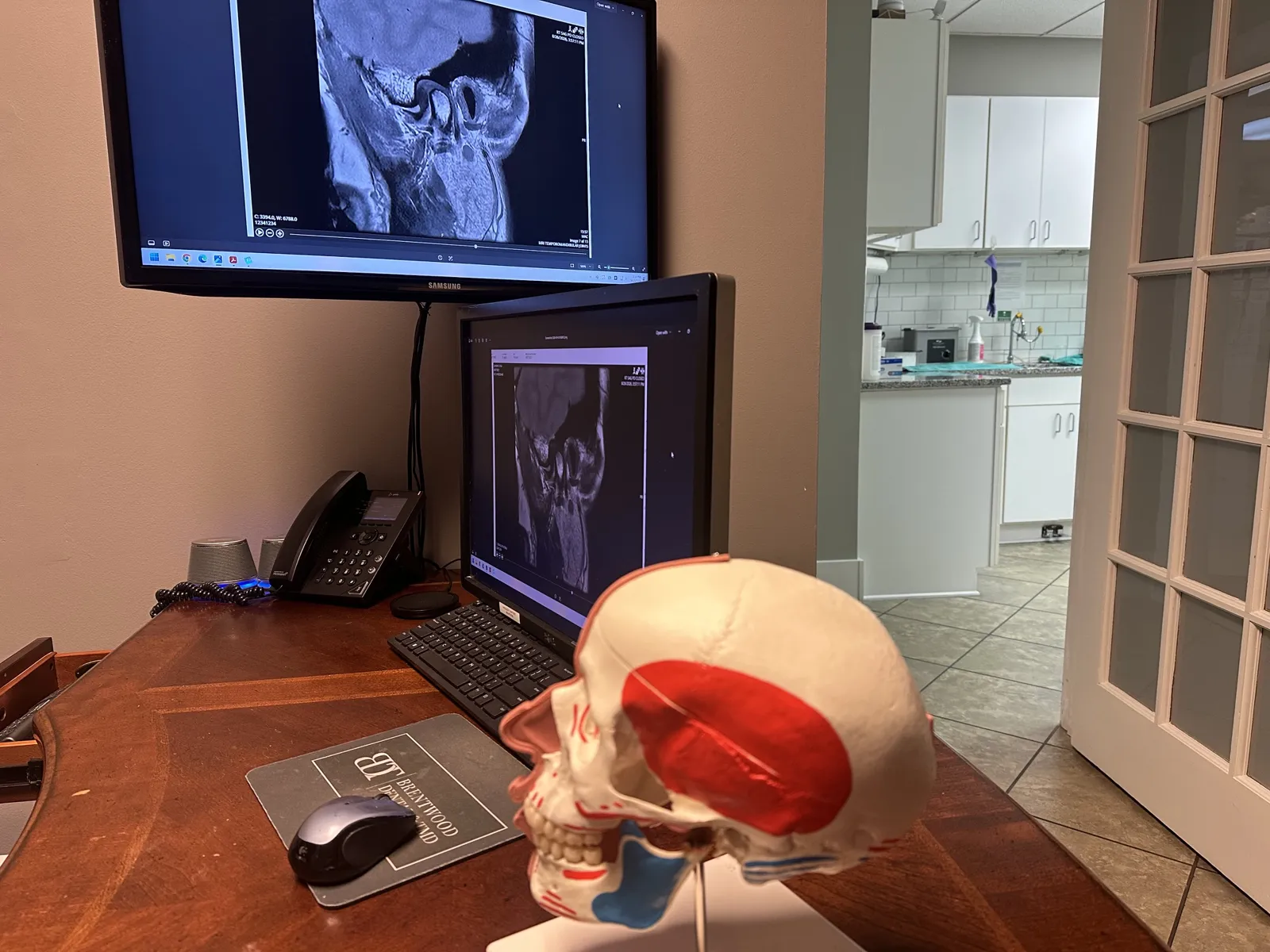
Imaging earns its cost whenever a repositioning orthotic is on the table, because that appliance only makes sense if a scan has confirmed what the disc inside your joint is actually doing. Repositioning a jaw around a disc problem nobody has seen is exactly the situation the TMJ Association’s warnings describe. Magnetic resonance imaging (MRI) is the tool that shows the disc directly, and the Cleveland Clinic lists MRI among the imaging tests used to diagnose temporomandibular joint disorders alongside X-rays and CT scans.
For flat-plane splints used for simple grinding, imaging is usually not needed. If a dentist suggests a full imaging workup for a basic guard, they should explain the reason. Imaging becomes important if you have symptoms like painful clicking, locking, a bite that feels different, or if a previous splint made things worse.
For jaw problems in that second category, the reasonable next step is an evaluation with a dentist who works in temporomandibular disorder (TMD) diagnosis daily and treats imaging as the basis for treatment rather than an afterthought. In the Nashville area, that is the approach at Brentwood Dental & TMD, where Dr. Holmes has ordered and interpreted more than 24,000 TMJ MRIs across a caseload that is roughly 95% TMD and complex restorative work. That imaging volume matters for a splint decision specifically, because it is what determines whether you need a reversible flat-plane appliance, a repositioning approach, or no appliance at all.
Is a $30 Drugstore Night Guard Ever Good Enough?
Yes. For short-term protection against tooth wear in simple grinding cases without jaw pain, locking, or joint symptoms, a boil-and-bite guard costing $15 to $25, as CareCredit notes, is a reasonable place to start. It acts as a cushion between your teeth, and for some people, that is enough.
The honest limits matter as much as the honest endorsement. A drugstore guard is a protective barrier, not a treatment for a jaw joint disorder. The TMJ Association cautions that over-the-counter splints are hard to fit precisely and can cause permanent bite changes by moving teeth. CareCredit’s own breakdown notes that a poor fit might result in more grinding, not less. So the drugstore guard is fine as tooth protection for uncomplicated bruxism (the clinical term for tooth grinding and clenching), and it stops being fine the moment it is asked to do a therapeutic job or the moment jaw symptoms enter the picture.
A simple rule can help. If your only issue is worn or chipped teeth from grinding, trying a cheap guard is low risk. If you have pain, locking, painful clicking, or a bite that feels different, you need a diagnosis instead of just a guard.
Do Some TMJ Patients Skip the Splint Entirely?
Yes, and federal guidelines say this is common for many people. NIDCR explains that many TMJ disorders are short-term and go away on their own. They recommend starting with self-care, like eating soft foods, using heat or cold with gentle jaw stretches, taking over-the-counter anti-inflammatory medicine, and avoiding habits like gum chewing, nail biting, and clenching.
NIDCR also says that clicking or popping in the jaw without pain is common and usually does not need treatment. But if these sounds come with pain, locking, limited movement, or changes in your bite, you should get them checked.
This is something you will not hear from a page selling splints. The cheapest TMJ splint is the one you do not need. A good dentist will tell you if self-care and time are the best treatment. It is better to pay for an exam that shows you do not need an appliance than to buy one you never use.
Does Insurance Cover TMJ Splint Cost in Tennessee?
Often not, and you should verify your specific plan before treatment starts rather than after. The TMJ Association reports that because the scientific evidence for splint safety and effectiveness is limited, neither medical nor dental insurance may cover splint therapy, and it advises checking with your carrier in advance. TMD care in general sits in a gap between medical and dental coverage, and plans vary widely on which side of that gap they place an oral appliance.
Two practical steps improve your odds. First, ask your carrier the specific question: is a custom occlusal splint covered when prescribed for a documented TMD diagnosis, and under which code? Second, ask the dental office for a pre-treatment estimate you can submit before anything is fabricated. If coverage falls through, financing is an option; Brentwood Dental & TMD offers CareCredit financing with approved credit, and the details are on the appointments page.
How Should You Compare TMJ Splint Quotes Around Nashville?
Compare what each fee includes, not the sticker number, because a low quote that excludes adjustment visits can cost more by the end than a higher quote that bundles them. Patients along the southern corridor often collect quotes from providers in Green Hills, Franklin, and Brentwood, and those quotes are only comparable once you know what sits inside each one.
The TMJ Association publishes a list of questions worth asking any dentist proposing a splint, and three of them do most of the work in a cost comparison. Is this splint meant to relieve pain and relax muscles, or to reposition my bite? How many follow-up visits are included, and what does each cost if not? And will I be able to stop wearing the device once symptoms improve, or is this the first step in a larger treatment plan I am committing to? A quote that answers those three questions plainly is a quote you can trust enough to compare. A quote that requires a signed contract for a multi-stage treatment package before the diagnosis is explained deserves a second opinion, and the TMJ Association warns specifically about that arrangement.
One more comparison point costs nothing: ask who does the diagnosis and who does the adjustments. In a solo practice, the dentist who examined you is the one calibrating your appliance at every visit. In higher-volume settings, those can be different people, and with an appliance that works by millimeters, continuity has real value.
Get a Straight Answer on Your Splint Question
If you want to know which appliance your jaw actually needs, or whether it needs one at all, Brentwood Dental & TMD serves the Nashville area as its center for TMJ treatment and complex dentistry. Call (615) 371-8888 to schedule a consultation, and bring any splint you already own; it is useful diagnostic evidence.