 BRENTWOODDENTAL & TMD
Published June 2026.

Key Takeaways
Most TMJ myths get the basic facts wrong, and believing them can delay care for a real, physical condition that may worsen if persistent symptoms are ignored.
- TMD is a physical musculoskeletal condition, not something that is only “in your head,” though stress can make it worse.
- Mild jaw problems often settle on their own, but ongoing clicking, locking, or pain should be evaluated rather than waiting out.
- TMD is common, affecting an estimated 11 to 12 million U.S. adults, so it is far from rare.
- A custom appliance designed for your specific diagnosis is not the same as a generic drugstore night guard.
- An accurate diagnosis should always come before any treatment that permanently changes your bite or teeth.
The most common TMJ myths are that nothing can be done about jaw pain, that it is purely psychological, that it always disappears on its own, and that the condition is rare. Each of these is misleading and can keep people from getting help.
Temporomandibular joint disorder (TMD, often called TMJ) covers a group of conditions affecting the jaw joint and the muscles that move it. Because so much misinformation circulates online and between friends, many people make decisions about their jaw pain based on ideas that simply are not accurate. The National Institute of Dental and Craniofacial Research (NIDCR) describes temporomandibular disorders as a group of more than 30 conditions that cause pain and dysfunction in the jaw joint and the muscles that control jaw movement. That range alone tells you why one-size-fits-all assumptions tend to fall apart.
Dennis M. Holmes, DMD has spent decades correcting these misunderstandings at the chair. The sections below walk through the myths he hears most often and what the evidence actually says.
Is TMJ Pain All in Your Head?
No. TMD is a genuine physical condition involving the joint, the disc, and the muscles of the jaw, even though stress may worsen the symptoms. Calling it purely psychological is one of the most damaging TMJ myths because it leaves people feeling dismissed.
The physical reality of TMD is well documented. NIDCR ranks these disorders as the second most common musculoskeletal condition after chronic low-back pain, which places jaw dysfunction in the same category as other recognized orthopedic problems. The pain comes from real tissue: irritated muscles, a displaced disc, or joint changes that can be seen and measured.
Stress does play a role, but as a trigger rather than the root cause. The Cleveland Clinic notes that TMJ disorders have many causes, including teeth grinding, stress, and acute injuries. Stress can lead someone to clench or grind, which loads the jaw muscles and joint and worsens an underlying physical problem. That is very different from the pain being imaginary.
“Patients tell me all the time that someone made them feel like their jaw pain was just anxiety,” says Dennis M. Holmes, DMD at Brentwood Dental & TMD in Brentwood, TN. “When we image the joint, we usually find a clear physical reason for what they are feeling. Stress can turn up the volume on the problem, but it is not the source of it.”
Treating TMD as a stress-only issue often means the physical component never gets addressed. That is why a proper evaluation matters more than reassurance that it is “nothing.”
Does TMJ Pain Always Go Away on Its Own?
Not reliably. Many mild cases of jaw discomfort do settle without treatment, but persistent clicking, locking, or pain is a different situation and should not simply be waited out, because joint problems can be progressive.
This myth has a kernel of truth that makes it tricky. NIDCR acknowledges that many TMDs last only a short time and go away on their own, and recommends starting with simple, conservative steps. For a sore jaw after a long dental visit or a stressful week, time and rest may be all you need.
The problem is applying that to every case. When clicking becomes frequent, when the jaw starts to lock, or when pain keeps returning, those are signs of an internal joint issue that may not resolve by itself. The Cleveland Clinic advises that if you have popping jaws when eating or speaking, you should see a healthcare provider, even if you do not have pain. Noises during normal function are worth checking because the disc inside the joint may be slipping out of position.
Dr. Holmes sees the consequences of waiting too long. “The patients who struggle the most are often the ones who assumed it would fix itself for a year or two,” he explains. “Mild flare-ups can calm down on their own. But a joint that keeps clicking or locking is telling you something, and ignoring it can let a manageable problem turn into a harder one.” Drawing on more than 12,000 TMD cases, he points out that early evaluation gives more options for stabilizing the joint before damage advances.
The takeaway is not that every twinge needs treatment. It is that you should not assume persistent or worsening symptoms will disappear on their own.
Can Anything Actually Be Done About TMJ?
Yes. There is a well-established range of treatments for TMD, from conservative at-home care to targeted clinical options, and most people improve with the right plan. The belief that “nothing can be done” is simply outdated.
NIDCR outlines a clear treatment ladder that usually starts conservatively, including eating soft foods, applying heat or cold along with gentle jaw exercises, taking over-the-counter anti-inflammatory medications, and reducing habits such as jaw clenching and gum chewing. For many people, these first steps make a real difference.
When simple measures are not enough, other evidence-supported options exist. NIDCR lists physical therapy, self-management and behavioral approaches such as biofeedback, and certain medications among treatments that can help, depending on the specific diagnosis. The key word is diagnosis: what helps one type of TMD is not the same as what helps another.
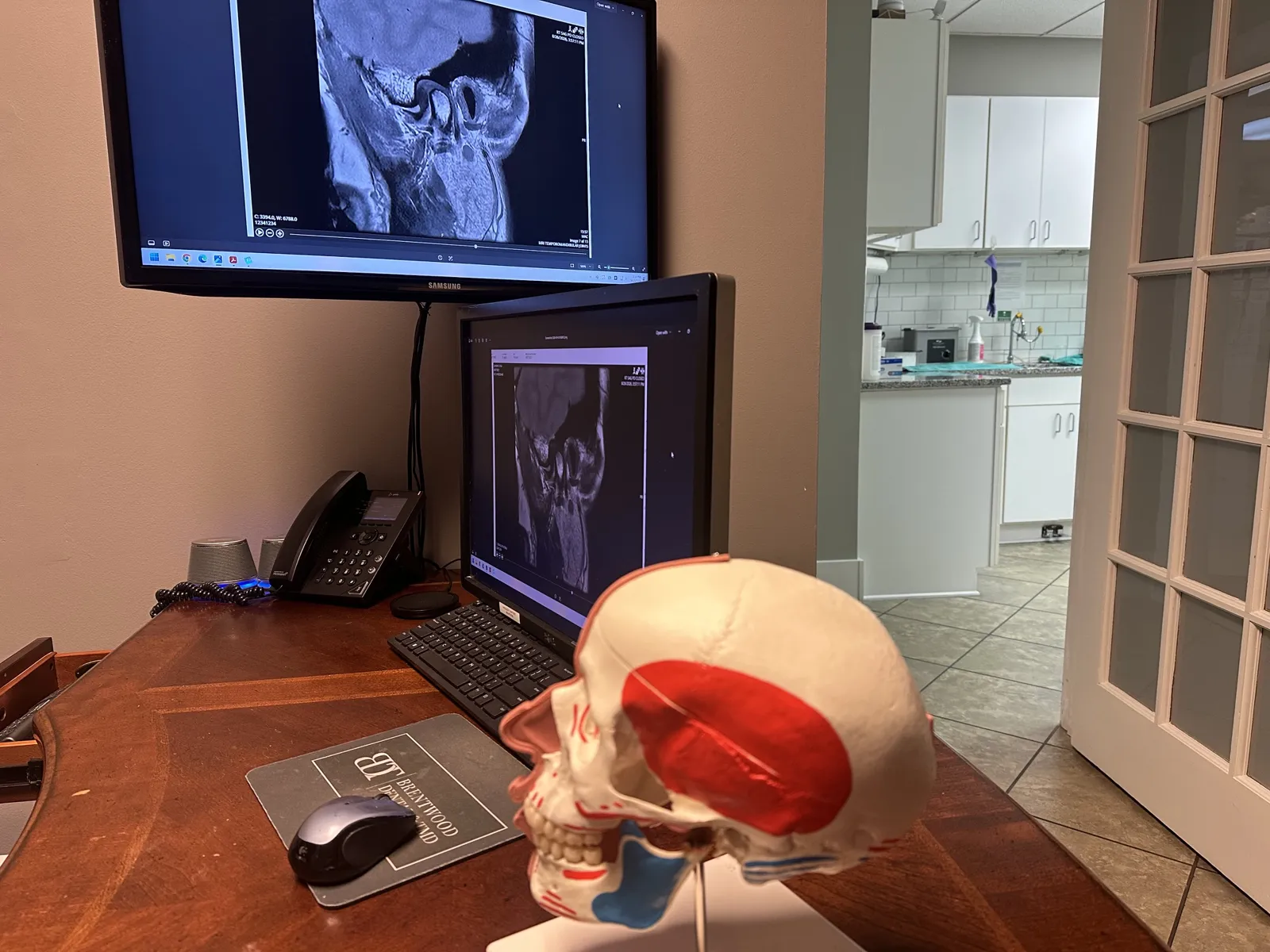
This is where accurate imaging changes the picture. Dr. Holmes has ordered and interpreted more than 24,000 TMJ MRIs across his career, which lets him match the treatment to the actual joint condition rather than guessing. As a Fellow of the Academy of General Dentistry with 30+ years focused on these cases, he has built a systematic approach to a problem that confuses many clinicians. You can read more about his diagnostic process on the TMJ / TMD therapy page.
Feeling stuck after a treatment that did not work usually means the diagnosis was incomplete, not that your case is hopeless.
Is TMJ a Rare Condition?
No. TMD is common, affecting millions of American adults, and it is more frequent in women than in men. Treating it as an unusual or obscure problem is another myth that leaves people feeling alone with their symptoms.
The numbers are considerable. NIDCR reports that about 11 to 12 million adults in the United States had pain in the region of the temporomandibular joint in a recent study. NIDCR also notes that temporomandibular disorders are twice as common in women than in men, especially in women between 35 and 44 years old.
Because the condition is widespread but often misunderstood, many people cycle through doctors before anyone connects their headaches, ear pressure, or facial pain to the jaw joint. NIDCR points out that patients with TMDs are often misdiagnosed or receive delayed or ineffective treatment because the causes and symptoms are not always obvious. Knowing how common TMD is can be the nudge someone needs to seek a focused evaluation instead of assuming their case is one in a million.
Does Jaw Clicking Always Mean You Need Treatment?
Not always. A jaw that occasionally pops without any pain may be normal and may not need treatment, but clicking that is frequent, painful, or paired with locking deserves a professional look.
NIDCR is clear about this: sounds such as clicking or popping without pain in the jaw joints are common, are considered normal, and do not need treatment. So an isolated click when you yawn widely is usually not a cause for alarm.
The line gets crossed when the noise comes with other signs. The Cleveland Clinic explains that people who develop jaw clicking as a symptom of TMD commonly have other symptoms, and that clicking during normal eating or speaking is worth having evaluated even without pain. The reason is that the popping sound can come from the joint’s cushioning disc slipping out of place, which is a mechanical issue that can progress.
The practical rule is simple. Painless, occasional sounds are usually fine to monitor. Frequent clicking, any locking, or noise that comes with pain is worth getting checked rather than dismissing.
Can You Have TMJ Without Clicking or Pain?
Yes, to both. Clicking is only one possible sign of a TMJ disorder. NIDCR also lists jaw pain, stiffness, limited movement or locking, and a change in how your upper and lower teeth fit together, and any of these can show up with a silent joint.
A jaw that used to click and suddenly stops is not always good news. The TMJ Association explains that a displaced disc can stop sliding back into place, called displacement without reduction, and when that happens the click often goes away while opening becomes more limited. TMJ problems can also be painless at first: a jaw that opens less than it used to, shifts to one side as you open, or feels tired after meals is worth an exam even if it does not hurt. Painless clicking on its own, with normal opening, is the one pattern that does not need treatment.
Is a Custom TMJ Appliance the Same as a Drugstore Night Guard?
No. A custom appliance is designed around your specific diagnosis and bite, while a generic over-the-counter night guard is made to a single universal shape. The two are not interchangeable, and using the wrong one can be unhelpful or even counterproductive.
Over-the-Counter Night Guard
Drugstore night guards are typically boil-and-bite trays meant to cushion the teeth against grinding. They can offer some protection for tooth surfaces, but they are not built from any assessment of your joint or the position of the disc inside it. NIDCR cautions that intraoral appliances should not be designed to permanently change your bite, and you should stop using one and consult your dentist if it causes pain. A generic device gives you no control over that fit.
Custom Appliance From a Diagnosis
A custom appliance is fabricated after a clinician evaluates your specific type of TMD. Dr. Holmes has noted that generic, universal splint designs are not recommended, and that when an appliance is needed, the design should reflect your diagnosis rather than a generic mold. This matters because the wrong appliance can fail to address the real problem or load the joint in an unhelpful way.
The comparison is not about price. It is about whether the device is matched to what is actually happening in your jaw. That requires an evaluation first, which a drugstore product cannot provide.
What Should You Do If You Think You Have a TMJ Problem?
Start with conservative care for mild symptoms, and seek a focused evaluation if clicking, locking, or pain persists. Getting an accurate diagnosis before any permanent dental work is the single most important step.
NIDCR’s guidance is to start with simple treatments first, consult a dentist or doctor, and avoid when possible treatments that involve permanently changing the jaw joints, teeth, or bite. That last point is worth emphasizing. NIDCR warns that there is no evidence that occlusal treatments such as grinding down teeth or orthodontic changes work for TMD, and they could make the problem worse when done without a clear reason.
This is exactly why diagnosis comes first. A thorough workup, including imaging when appropriate, identifies which of the many TMD types you have so that treatment fits the problem. Brentwood Dental & TMD focuses heavily on this kind of complex evaluation, and you can learn about the practice’s approach to jaw tension and headache care on the headaches and BOTOX treatment page. You can also read more about Dr. Holmes’s background and case experience on his bio page.
Schedule a Consultation
If jaw pain, clicking, or headaches have you wondering what is true and what is myth, a focused evaluation can give you real answers. Brentwood Dental & TMD serves the Nashville area as Nashville’s Center for TMJ Treatment & Complex Dentistry, and Dr. Holmes welcomes the chance to get to the source of your symptoms. Call (615) 371-8888 to schedule a consultation.